Holographic universe
Article on X: Holographic universe (opens in a new tab)
From my conversation with Grok on holographic universe hypothesis (opens in a new tab)
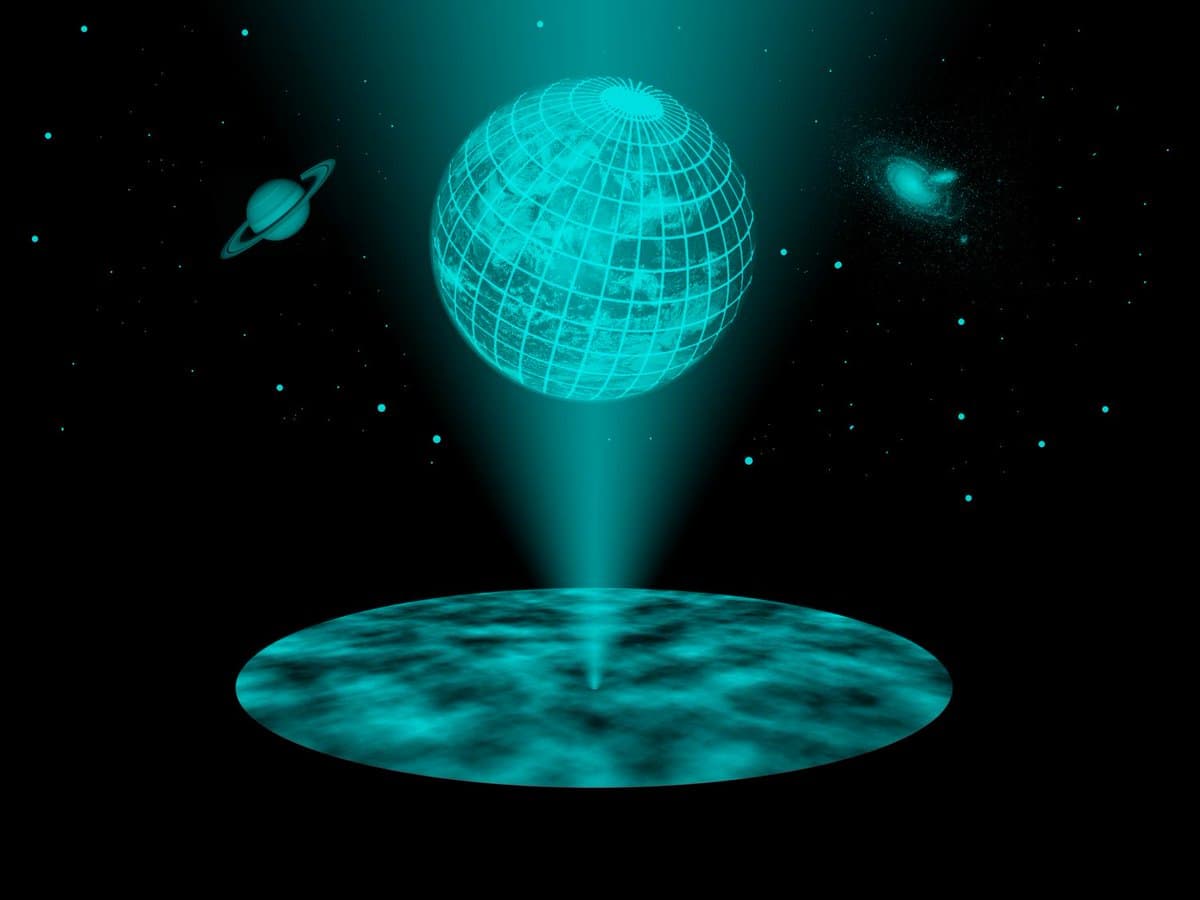
The holographic universe hypothesis, often referred to as the holographic principle, proposes that the entire three-dimensional universe we experience—complete with galaxies, stars, planets, and everyday objects—might actually be a projection or "hologram" encoded on a two-dimensional surface at its boundary. This idea suggests that what we perceive as volume and depth is illusory, with all the information describing reality stored on a lower-dimensional "screen," much like how a 3D hologram is created from data on a flat film. It's a speculative but mainstream concept in theoretical physics, bridging quantum mechanics and gravity, and it challenges our intuitive understanding of space and information.
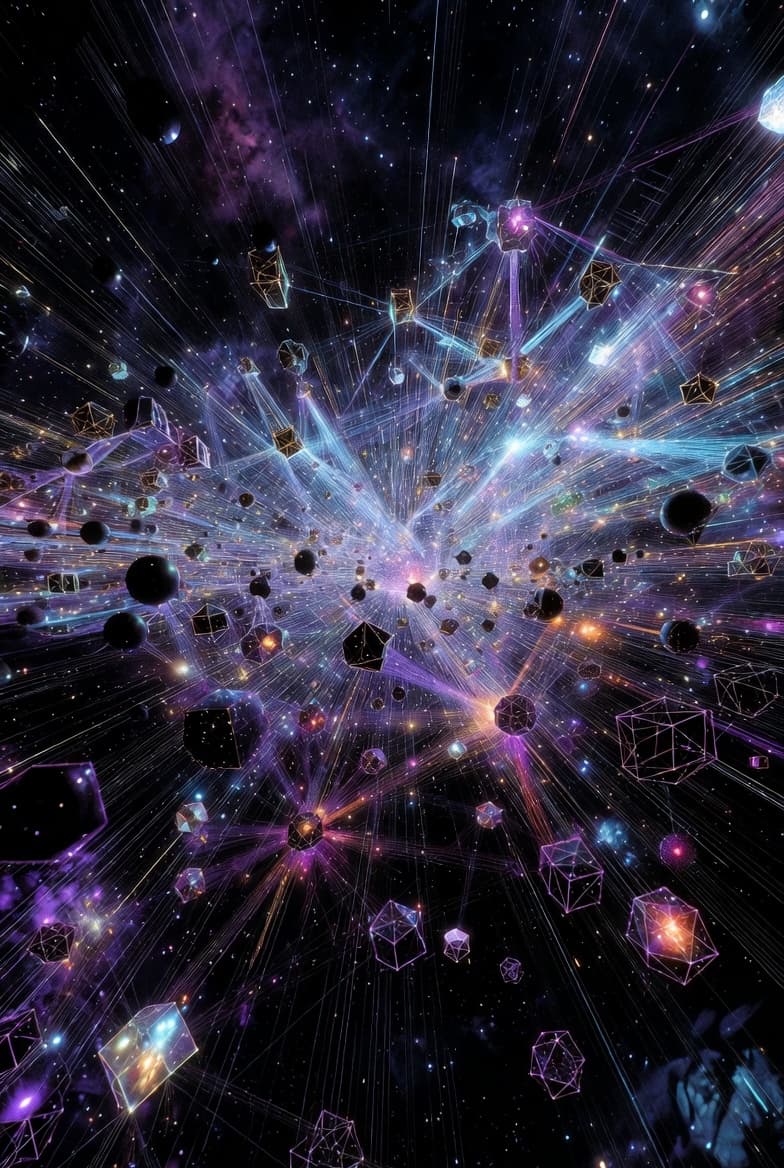
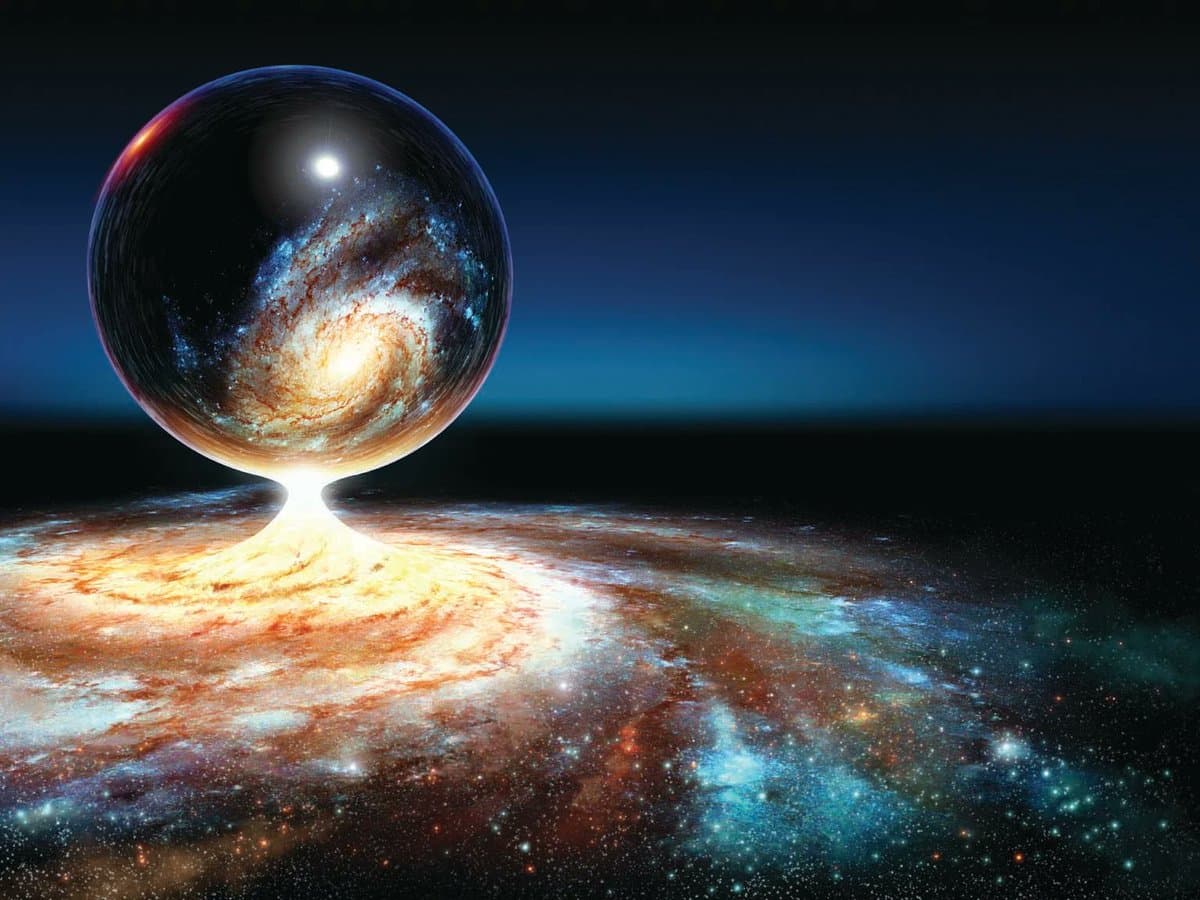
To visualize this, here's an artistic representation of the universe as a holographic projection:
Origins and Historical Development
The hypothesis emerged in the 1990s from efforts to resolve paradoxes in black hole physics. In the 1970s, physicists Jacob Bekenstein and Stephen Hawking showed that a black hole's entropy (a measure of its information content) is proportional to the surface area of its event horizon, not its volume. This was puzzling because entropy typically scales with volume in ordinary systems, hinting that information might be encoded on surfaces rather than in 3D space.
Building on this, Dutch physicist Gerard 't Hooft proposed in 1993 that the information in any region of space could be fully described by data on its boundary, with at most one degree of freedom per Planck area (the smallest unit of area in quantum gravity). American physicist Leonard Susskind expanded this in 1995, applying it to the entire universe and dubbing it the holographic principle. Susskind likened our reality to a hologram where the 3D world is an image projected from a distant 2D surface.
A major breakthrough came in 1997 with Juan Maldacena's AdS/CFT correspondence, a duality in string theory that equates a gravitational theory in anti-de Sitter (AdS) space—a higher-dimensional bulk—with a conformal field theory (CFT) on its lower-dimensional boundary. This provided a mathematical framework showing how gravity could emerge from quantum interactions on a "flat" surface, making the holographic idea more concrete.
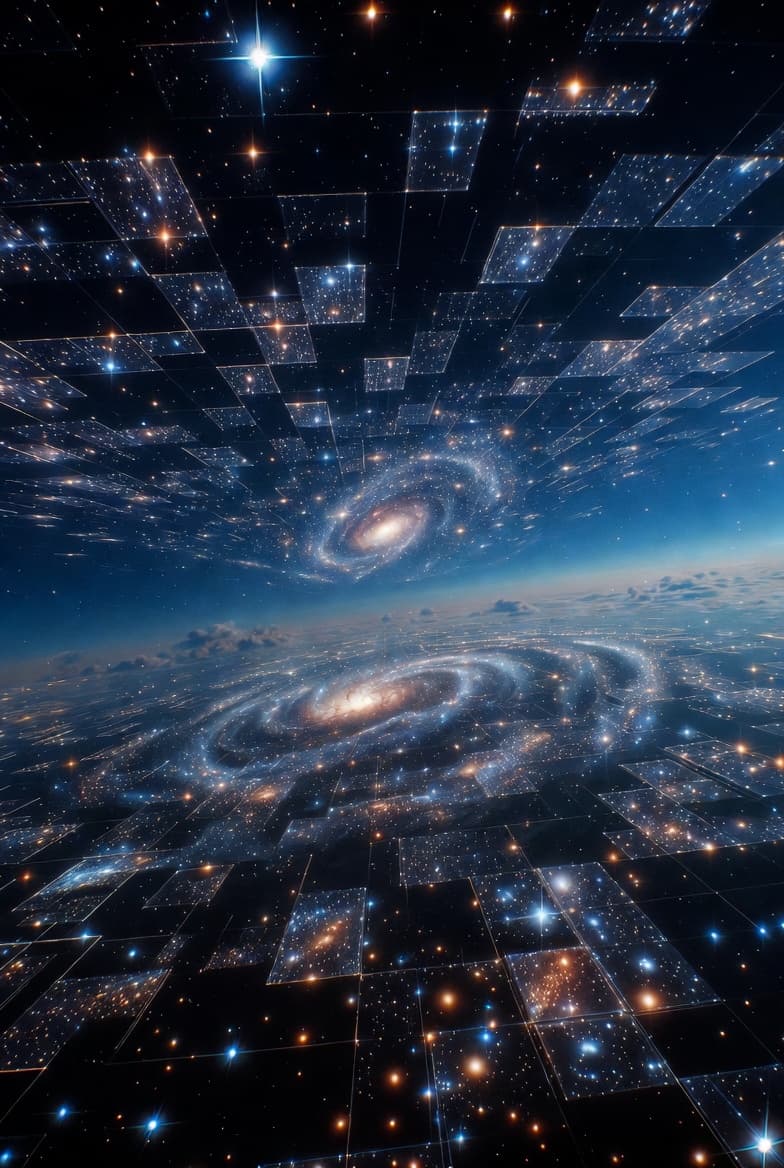
Another illustration depicting the universe emerging from a boundary projection:
Key Concepts and Mechanisms
At its core, the principle relies on information theory. In physics, everything can be described as information, and the holographic view posits that the maximum information in a volume is limited by its surface area. For black holes, this resolves the information paradox: When matter falls in, its data isn't lost but "smeared" across the horizon like a hologram.
Extending to the cosmos, if the universe is holographic, our 3D experiences (and even time) might arise from quantum entanglement and fluctuations on a cosmic boundary—possibly the edge of the observable universe or a higher-dimensional structure. Some models incorporate extra dimensions, like in M-theory, where our 4D spacetime (3 space + 1 time) is the "shadow" on the wall of a 5D room. Recent work explores how this could explain the Big Bang or dark energy, with proposals like holographic cosmology involving imaginary time or wormholes.
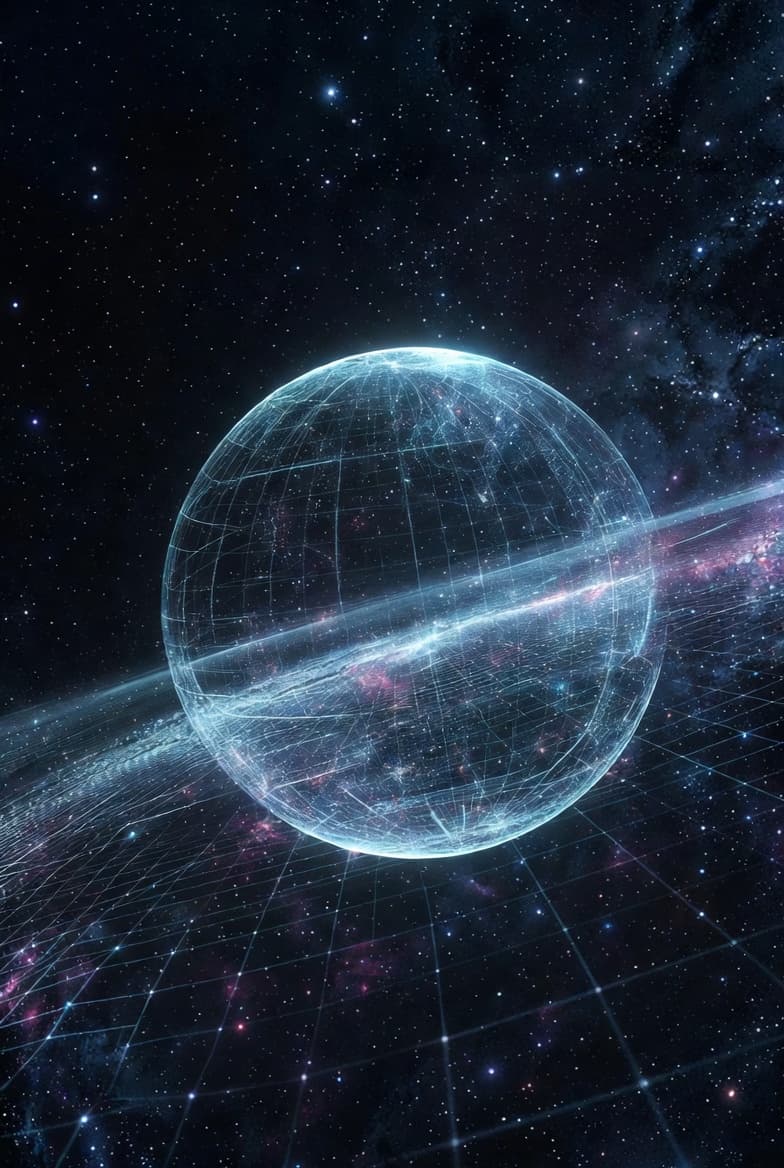
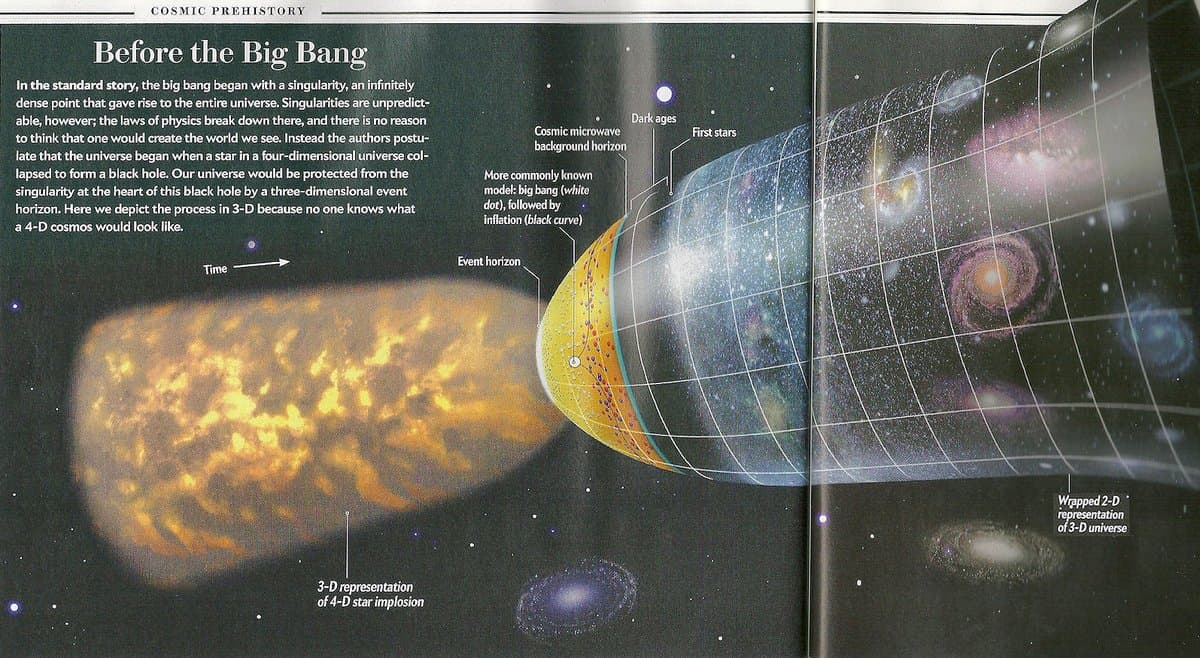
A diagram showing a 4D supernova implosion represented in holographic terms:
Implications and Debates
If true, this hypothesis implies gravity is an emergent phenomenon, not fundamental, arising from quantum rules on the boundary—like how thermodynamics emerges from molecular statistics. It could unify quantum mechanics and general relativity, solving long-standing issues in quantum gravity. Philosophically, it echoes Plato's cave allegory: We're perceiving shadows of a deeper reality.
However, it's not without challenges. AdS/CFT works in AdS space, which has negative curvature, unlike our expanding de Sitter universe. Extending it to our cosmos remains an open problem, though progress is being made using tools like 1930s-era mathematics (e.g., hypergeometric functions) to model quantum threads in holographic fabrics. Experimental evidence is scarce, but indirect tests could come from cosmic microwave background data or quantum computing simulations of holographic dualities.
As of 2026, the idea remains a vibrant area of research, with debates ongoing about whether it fully describes our universe or is a useful tool for specific problems. It's a reminder of how counterintuitive the universe can be, pushing the boundaries of what we consider "real."