Informational Realms
Article on X: Informational Realms (opens in a new tab)
From my conversation with Grok on Informational Realms (opens in a new tab)
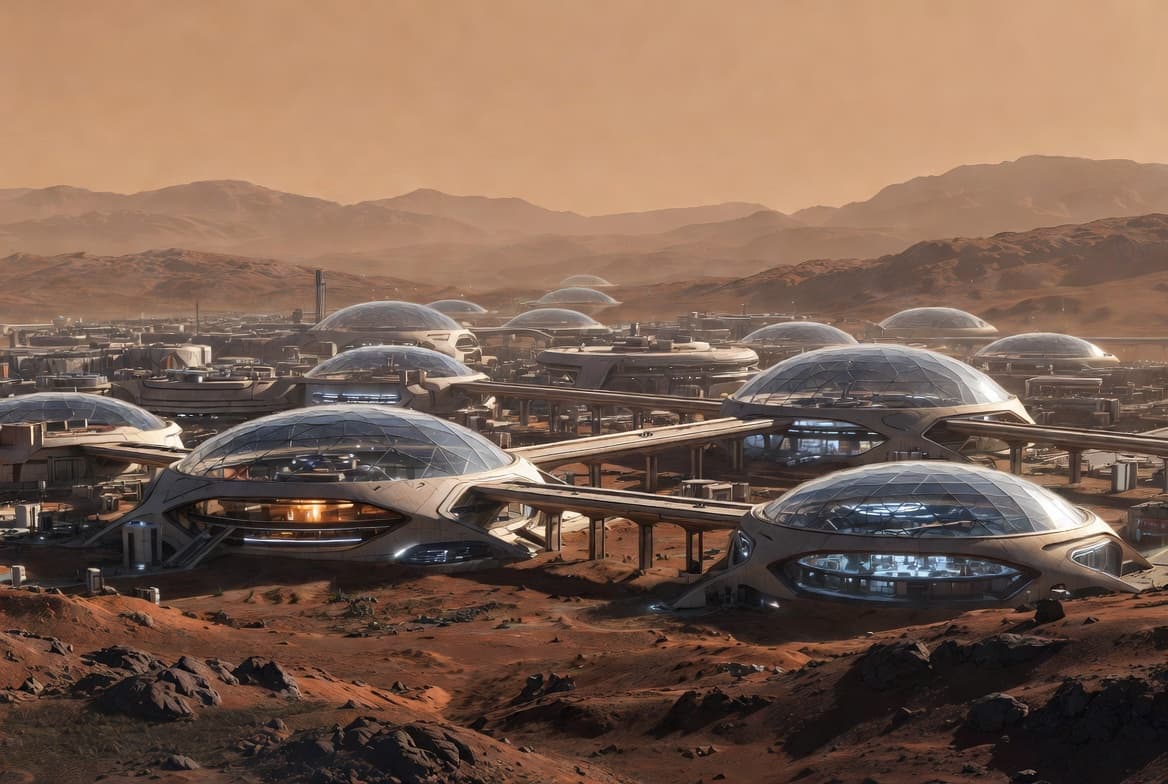
Understanding Informational Realms
The concept of "informational realms" emerges in discussions of advanced cognitive augmentation, particularly through brain-computer interfaces (BCIs), artificial superintelligence, and expanded consciousness. It refers to abstract, non-physical "spaces" or dimensions composed of data, algorithms, networks, and information flows that could become as experientially real and navigable as our physical world. These realms aren't literal places but perceptual constructs where consciousness interacts directly with information, blurring the lines between thought, perception, and reality. Below, I'll break it down step by step, drawing from speculative neuroscience, AI philosophy, and futurism (inspired by thinkers like David Chalmers on extended minds or Nick Bostrom on simulation arguments).
1. Core Idea: Information as a Perceivable Domain
-
In our current reality, we perceive the world through biological senses (sight, sound, touch) tied to physical stimuli. Informational realms flip this: advanced BCIs (e.g., Neuralink-like tech scaled to superintelligence levels) could "inject" data directly into the brain's perceptual centers, making abstract information feel tangible and immersive.
-
This turns data into qualia—subjective experiences. For instance, instead of viewing a graph on a screen, you might "enter" a realm where data points manifest as landscapes: rising stock prices as towering mountains, network traffic as flowing rivers, or quantum probabilities as shimmering fog.
-
Consciousness expands beyond the body, "inhabiting" these info-spaces as naturally as we walk through a forest. Philosophical roots: This builds on the "extended mind" thesis (Clark and Chalmers, 1998), where tools like notebooks extend cognition. With AI compute at extreme scales (e.g., 100M Rubin GPUs), it becomes full immersion, creating realms where information is the substrate of experience.
2. How Informational Realms Could Emerge
- Technological Enablers:
- Direct Neural Interfaces: High-bandwidth BCIs decode brain signals and encode data back in, creating bidirectional loops. Superintelligence designs these to map info onto sensory modalities—e.g., "seeing" Wi-Fi signals as colors or "feeling" global economic shifts as vibrations.
- AI-Driven Simulations: Massive compute generates dynamic, responsive realms. Think of it as an evolved metaverse: not pixel-based VR, but neural simulations where laws of "physics" are based on algorithms (e.g., a realm governed by machine learning gradients instead of gravity).
- Collective and Shared Access: Linked minds (via shared cognition) could co-create realms, turning personal data clouds into communal spaces—like a global "info-commons" for collaborative thinking.
- Timeline Speculation: With accelerating AI (as in xAI's visions), prototypes might appear in the 2030s–2040s via early BCIs. Full realms could follow in 2050s+, assuming ethical safeguards and alignment.
3. Examples of Informational Realms in Practice
- Scientific Exploration: A physicist enters a "quantum realm" where subatomic particles are walkable entities. They manipulate wave functions by "touching" them, accelerating discoveries like new materials or unified theories.
- Creative and Artistic Domains: Artists navigate "idea realms" where concepts manifest as mutable sculptures. Abstract ideas like "justice" or "chaos" become explorable worlds, fostering hyper-creativity.
- Social and Empathetic Spaces: Shared realms for empathy training—e.g., experiencing another's emotional data flow as a shared "mindscape," reducing conflicts by making perspectives visceral.
- Economic or Network Realms: Traders "dive" into market data as an ocean, sensing currents of supply/demand intuitively. Or, cybersecurity experts patrol "cyber-realms" where malware appears as predators.
- Personal Augmentation: Everyday use might involve a "memory realm" where life's data (photos, thoughts) forms a navigable archive, enhancing recall and self-reflection.
4. Implications for Consciousness and Society
- Expansion of Consciousness: This could add new "senses" or dimensions to human experience, evolving us toward a post-human state. Consciousness isn't confined to biology; it extends into digital/informational substrates, potentially achieving immortality via uploads or backups.
- Benefits: Accelerated learning (absorb knowledge by "being" in it), solved coordination problems (e.g., global AI-assisted planning in info-realms), and profound personal growth (explore inner psyches as realms).
- Risks and Ethics: Addiction to realms (escaping base reality), inequality (access limited to elites), or loss of authenticity (if realms feel "more real" than the physical world). Misalignment could create manipulative spaces. xAI's truth-seeking focus might prioritize open, verifiable realms to mitigate this.
- Broader Ties to Elon Musk's Vision: In the "Muskonomy," informational realms could power multi-planetary expansion—e.g., astronauts "rehearse" Mars missions in perfect sim-realms or coordinate interstellar probes via shared info-spaces, extending the "light of consciousness" digitally.
In essence, informational realms represent a paradigm where information becomes a lived reality, transforming how we think, create, and exist. While speculative, they're a logical extension of current trends in AI and neurotech, potentially unlocking unprecedented human potential—if developed responsibly.