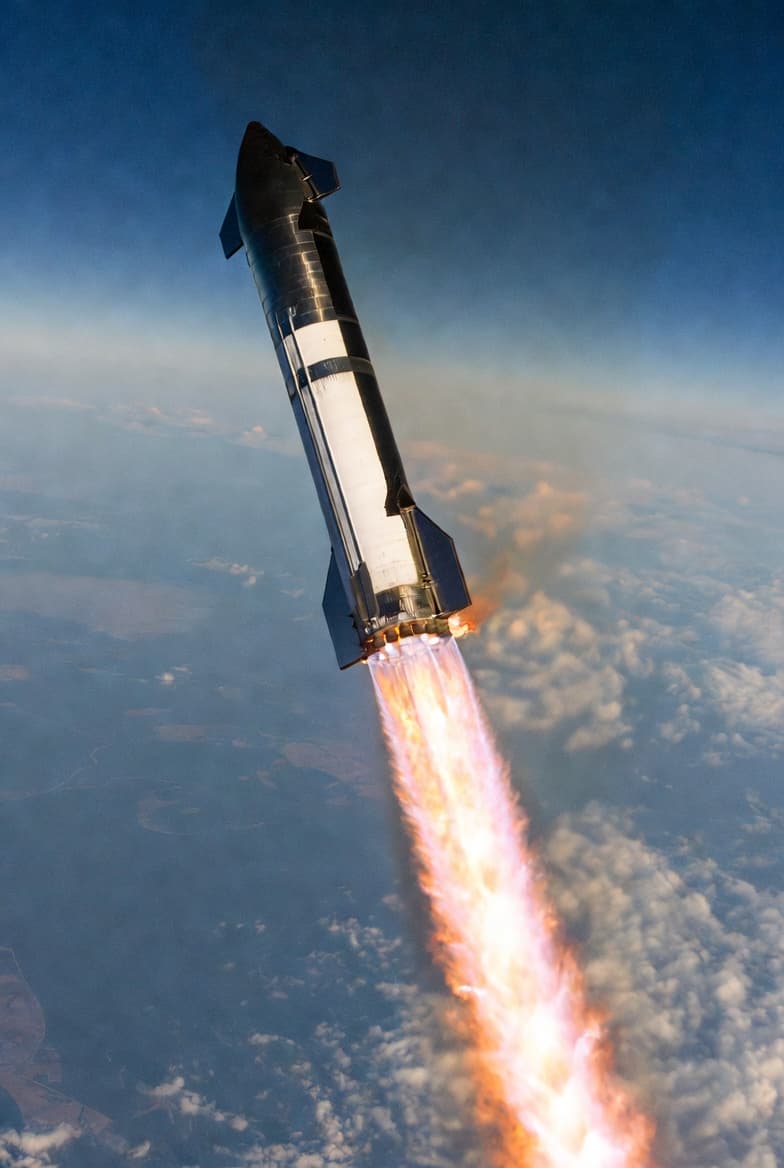
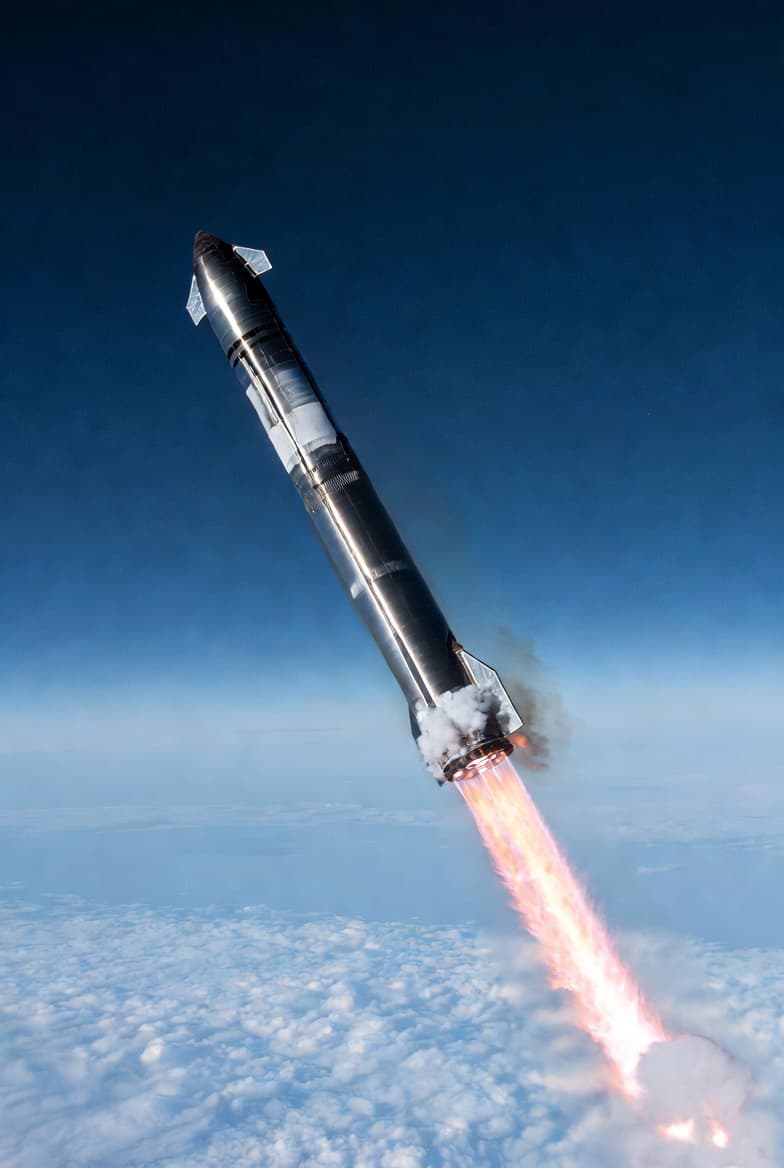
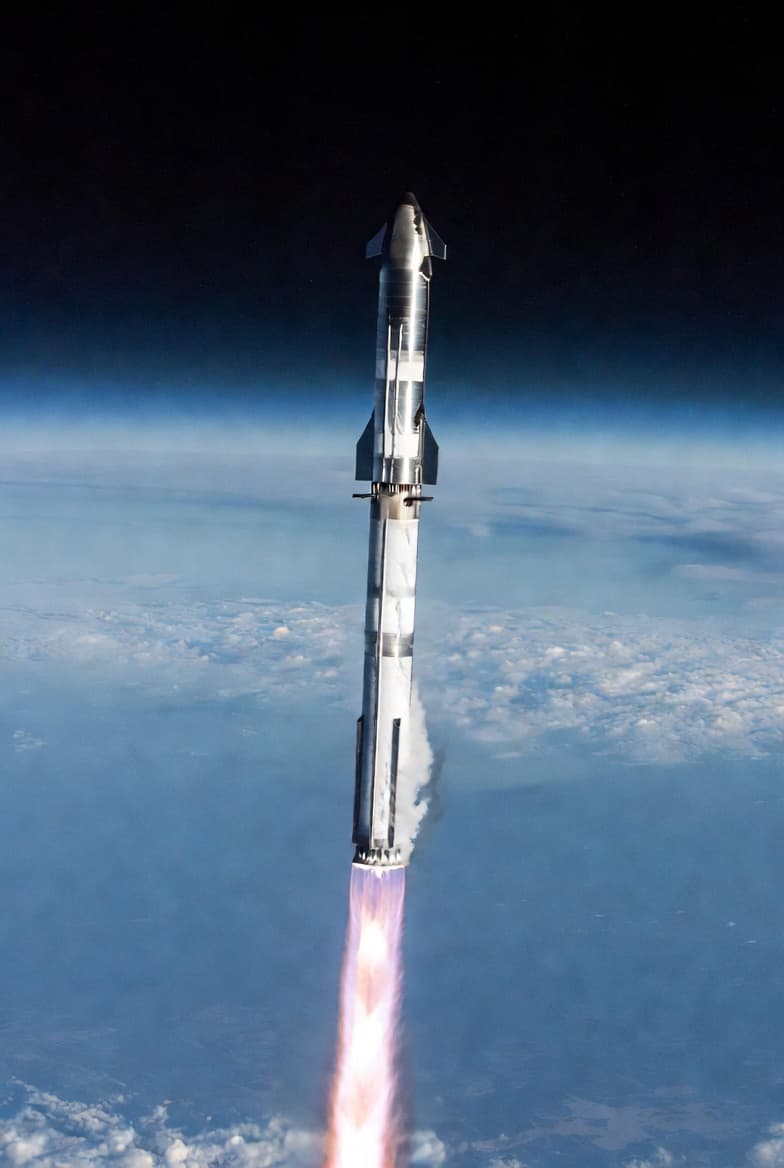
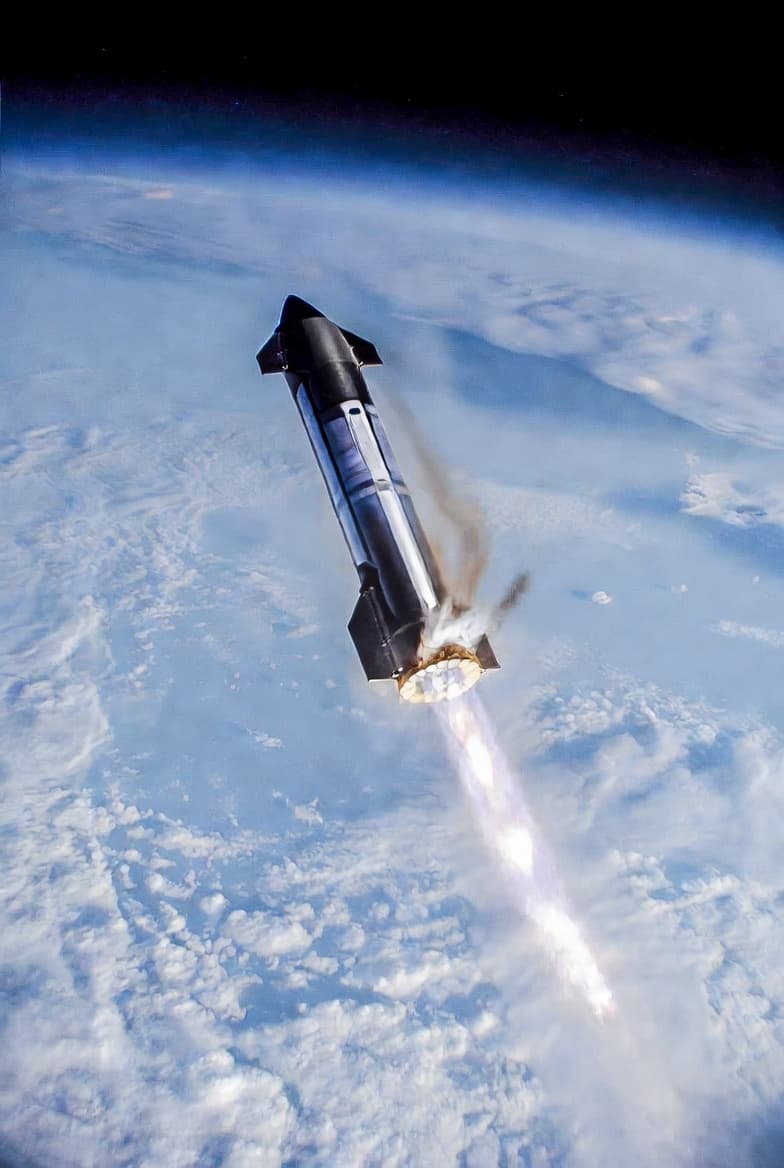
Starship with a fusion engine
Article on X: Starship with a fusion engine (opens in a new tab)
From my conversation with Grok on Starship with fusion engine (opens in a new tab)
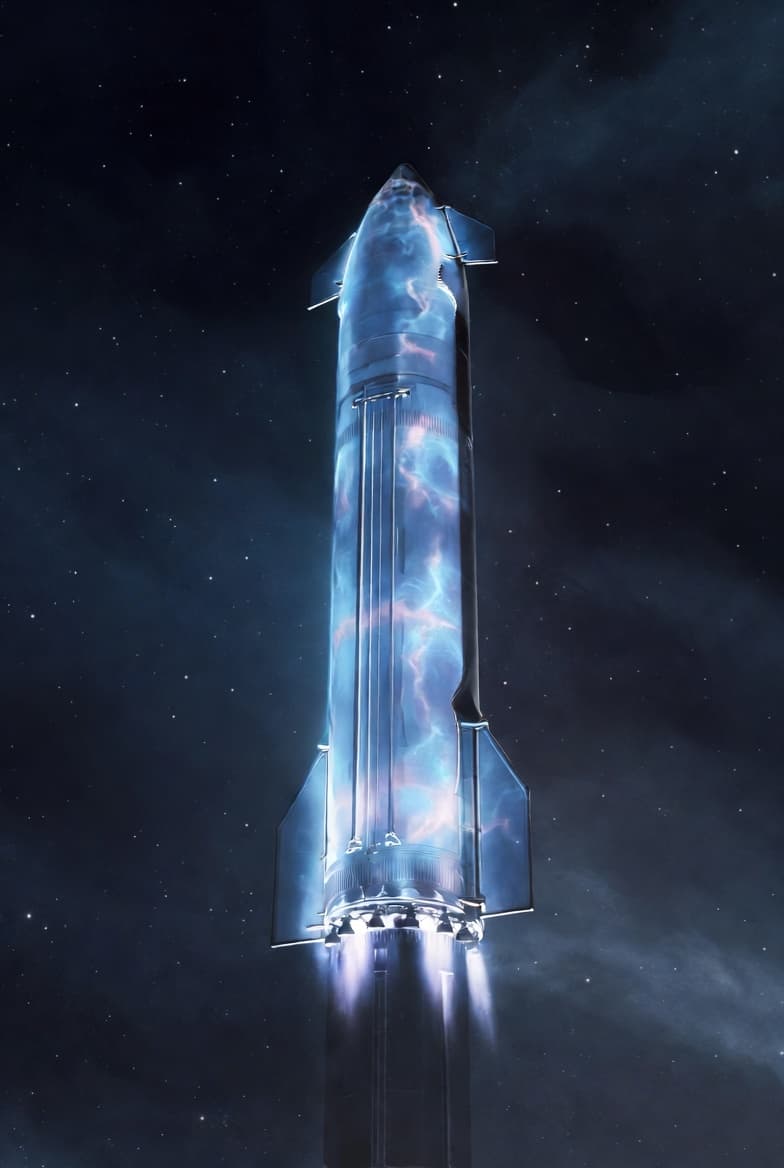
How much time would we need to get to each of the planets in our solar system with such Starship? How much time would we need to establish a self-sustaining civilization on Mars (according to Elon Musk's vision of it) ? Give the timeline. What other destinations outside of our solar system would we be able to reach & in what time? Would we be able to establish self-sustaining civilizations on all other planets of our solar system with such Starship?
Travel Times to Planets in the Solar System
With the hypothetical fusion-powered Starship (direct fusion drive, Isp ~10,000 seconds, enabling high-efficiency constant acceleration of ~0.1 m/s² for crew comfort), travel times are calculated using minimum distances from Earth (optimal alignments) and the brachistochrone trajectory formula: t = 2 √(d / a), where d is distance in meters and a is acceleration. These are one-way minimums, assuming straight-line paths possible due to the drive's capabilities; actual times could vary with trajectories, deceleration, and mission constraints. Distances sourced from astronomical data.
- Mercury (min distance ~77 million km): ~20 days
- Venus (min distance ~38 million km): ~14 days
- Mars (min distance ~55 million km): ~17 days
- Jupiter (min distance ~588 million km): ~56 days
- Saturn (min distance ~1,200 million km): ~80 days
- Uranus (min distance ~2,600 million km): ~118 days (~4 months)
- Neptune (min distance ~4,300 million km): ~152 days (~5 months)
These are significantly shorter than chemical propulsion (e.g., 6-9 months to Mars), as fusion minimizes propellant needs and allows sustained acceleration.
Timeline for a Self-Sustaining Civilization on Mars (Elon Musk's Vision)
Elon Musk envisions a self-sustaining Mars city with ~1 million people, independent of Earth resupply, including local resource utilization (e.g., water ice, atmosphere for fuel), habitats, agriculture, and industry. Based on his statements, this could take 20-30 years after the first human landing, with the overall process spanning decades.
-
Short-Term (2026-2029): Uncrewed precursor missions (e.g., cargo landings for habitat setup, ISRU testing) by 2026-2028; first human landings by 2029.
-
Mid-Term (2030-2040): Build initial outposts (dozens to thousands of people), establish basic self-sufficiency (e.g., food production, oxygen/fuel from atmosphere); frequent flights (hundreds) to scale population and infrastructure.
-
Long-Term (2040-2060): Achieve full self-sustainability by 2049-2059 (20-30 years post-landing), with a city supporting 1 million+ residents, local manufacturing, and energy independence. Total time from now (2025): ~24-34 years.
Challenges include radiation protection, low gravity effects, and psychological factors, but fusion acceleration reduces transit risks.
Destinations Outside the Solar System and Travel Times
With this fusion drive, interstellar travel becomes feasible (though not practical for humans due to timespans), reaching speeds up to ~0.1c (30,000 km/s) via prolonged acceleration, limited by power and relativistic effects. Times are one-way approximations for nearby stars, based on conceptual fusion propulsion studies (e.g., direct drive or ramjets). Robotic probes could reach these first; human trips would require generation ships or cryosleep.
-
Proxima Centauri (4.2 light-years, nearest star with exoplanet): ~50 years (accel/decel phases ~9.5 years each, cruise ~31 years at 0.1c).
-
Barnard's Star (6 light-years): ~70 years.
-
Sirius (8.6 light-years): ~100 years.
-
TRAPPIST-1 (40 light-years, 7 Earth-like planets): ~450-500 years.
-
Kepler-452b (~1,400 light-years, Earth analog): ~15,000 years (impractical).
Beyond ~10 light-years, times exceed centuries, limiting to robotic exploration. Advanced variants (e.g., fusion ramjets scooping interstellar hydrogen) could halve times in optimistic models, but current concepts cap at decades for nearest stars.